Hardly a day goes by without researchers discovering a new raw material that could turn the battery sector upside down. The latest one? A battery that uses… cows as building blocks. It sounds too crazy to be true. And yet the idea has potential.
Imagine: a battery that you can charge in just a few seconds, that lasts more than thirty years, and in which cattle provide the key components. It sounds like a crazy invention from some science fiction TV series, but this is science that is being seriously researched.
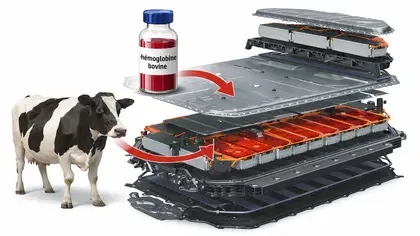
Researchers from the University of California in Los Angeles (UCLA) have published a remarkable new battery chemistry in the scientific journal Small. The starting point? Proteins that remain as a by-product of the meat industry. In technical terms: bovine serum albumin, the most common protein found in the blood of our grazing cows.
Edison already believed in it
The story actually begins more than a hundred years ago. In 1900 there were more electric cars on the road in America than gasoline cars. Thomas Edison strongly believed in the nickel-iron battery as the future of the automobile: durable, powerful and with a peak driving range of 160 kilometers for that time. But the technology did not succeed, because the combustion engine won the battle and nickel-iron chemistry also failed due to several disadvantages.
However, the international research team from UCLA has revived this forgotten Edison chemistry. The result is very promising: their prototype charges in seconds instead of hours and survived more than 12,000 charge and discharge cycles. That is the equivalent of more than thirty years of daily charging (from zero to one hundred percent – in practice it would last even longer), an unprecedented lifespan. By comparison, the widely used NMC technology in today’s electric cars can handle about 800 cycles.
Molecular architect
But how do cattle fit into this? The classic problem with nickel-iron batteries is that metal particles in the electrodes clump together, which drastically reduces efficiency. For their solution, the researchers drew inspiration from nature: bones and shells are also formed through proteins that act as scaffolding for mineral deposition.
It gets a bit technical. The bovine proteins function as a kind of molecular mold in which nickel and iron ions can settle with atomic precision. The metal particles that form are smaller than 5 nanometers (to give an idea: you would need up to 20,000 of these clusters to span the width of a human hair). These mini-particles are then mixed with graphene and baked at high temperature, where the proteins carbonize and encapsulate the metal clusters.
The result is that all atoms participate in the charging process, which explains the strongly improved performance. The smaller particles also provide a much better ratio between surface area and volume. In addition, the ions have to move less back and forth during charging and discharging, which further increases efficiency.
Soon in our cars?
Although fast charging is an important quality for modern batteries, there is a trade-off. The energy density of the prototype still does not reach that of today’s lithium-ion batteries, which means that driving range would lag behind. The sources give no exact figures, but some research on the internet suggests that the value is often ten times lower. That driving range from Edison’s time would therefore hardly improve if the technology were used in cars. The gain in reliability and charging speed would then disappear.
Apart from that, there are also ethical and climate-related questions to be asked about using livestock as an energy source, even if it concerns residual waste. But for now, the idea itself is what matters. The team is already exploring alternatives to bovine proteins: natural polymers that are cheaper and easier to scale. By the time everything becomes commercially viable, the cow as an expensive battery raw material may already be history.
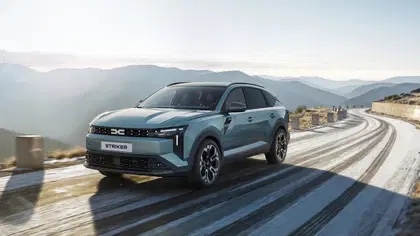
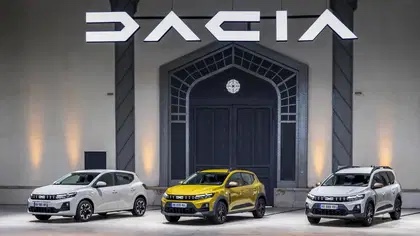
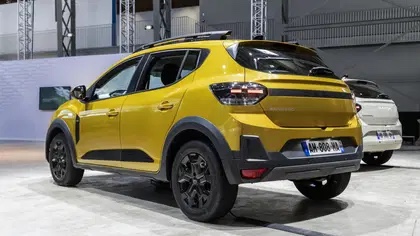
Dacia strengthens its presence in the C-segment with the Striker, a new cross-over available with several engine types. It combines the dynamics of a station wagon with the practicality of a spacious sedan and the ground clearance of an SUV.
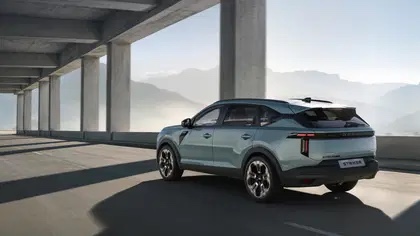
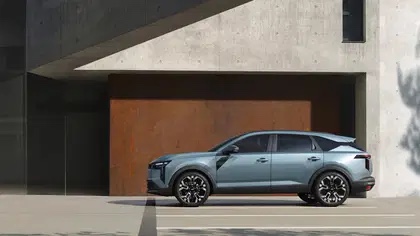
The Striker remains faithful to Dacia’s DNA and features a robust and distinctive design. Its dynamic lines, aerodynamic silhouette, and upright front are highlighted by the brand’s new modern daytime light signature. Attention has also been given to the details, including the striking design of the front doors and the glossy black strip connecting the rear lights, finished with a technical structure that reinforces the car’s modern and robust character.
The silhouette and aerodynamics of the Striker demonstrate a pragmatic engineering approach. The Striker is a 4.62-meter cross-over with multiple powertrains that will sit in the C-segment alongside the Bigster in Dacia’s lineup. Together, these two models form a duo that aims to strengthen the brand’s presence in this strategic segment.
The Striker was already previewed during the Strategy Day, alongside the futuREady plan. The model will be fully revealed in June. We already know that the range will include a hybrid, a hybrid with 4×4 drive, and an LPG version. With a starting price below €25,000, the Striker will be particularly affordable and promises a very attractive price-to-performance ratio.
New Sandero on the Way
During the presentation of the futuREady plan, Dacia also revealed some details about the next generation of the Sandero. This successful model, launched nearly twenty years ago, continues to evolve with its time and will be built on a new multi-energy platform designed to meet all customer expectations.
Dacia announced that the Sandero will remain the reference in terms of price-to-performance in its segment, a characteristic that plays a major role in its success. Now that the Renault Clio is positioned higher and has become more expensive since the arrival of the latest generation, the Renault Group keeps the Sandero as an entry-level model in its range.
Familiar Technical Solutions
In the future, Dacia will remain faithful to its current technical solutions. The Romanian brand will continue offering affordable and robust vehicles and will also keep relying on LPG, a fuel that is losing ground in Belgium but remains popular in certain countries, such as Italy.
Dacia promises to continue offering pragmatic, accessible, and future-oriented mobility. In the meantime, we look forward to more details about the Striker, which on paper has all the strengths to become a bestseller within a few months.
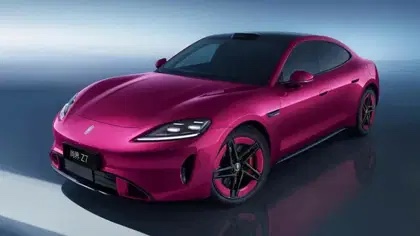
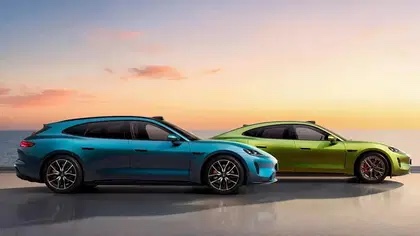
The SAIC Z7 is an electric sedan developed by the Chinese giant SAIC in collaboration with Huawei. Its design strongly resembles that of the Porsche Taycan, but the price is expected to be about four times lower. It illustrates the aggressive strategy of Chinese manufacturers in the electric vehicle market.
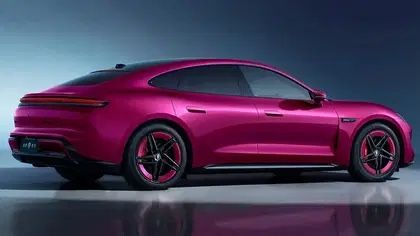
With its fastback profile, sloping roofline, muscular wheel arches, and flush door handles, the SAIC Z7 clearly echoes the design of the Porsche Taycan. The similarities can be seen in the roofline, the shape of the doors, and even the positioning of the side mirrors. However, SAIC attempts to differentiate itself with some distinctive design elements, such as a lighting signature with multiple LED points and a continuous rear light strip called Star River, which has already appeared on other models from the group.
At around five meters long, the Z7 fits into the segment of large premium electric sedans. While it once seemed that Chinese manufacturers had stopped directly copying certain European models, this car shows that SAIC—ironically a partner of Volkswagen in China—may still be falling back into old habits.
A Technological Showcase for Huawei
The Z7 is not just a design exercise. It also serves as a technological showcase for Huawei, a key partner in the project through the Harmony Intelligent Mobility Alliance (HIMA). The model is equipped with the Qiankun ADS 4.0 driver-assistance system, which relies on a combination of cameras, radars, and LiDAR sensors mounted on the roof.
Inside, the sedan features the HarmonyOS ecosystem, offering a highly connected digital cockpit with multiple screens integrated into a sleek dashboard. The Z7 also benefits from a modern electric platform with an 800-volt architecture, enabling extremely fast charging. Under optimal conditions, it can add roughly 200 km of driving range in just five minutes.
Promising Performance
Although the final specifications are not yet fully confirmed, several versions are expected. Early information suggests battery capacities of around 80 to 100 kWh, with both rear-wheel drive and all-wheel drive variants.
The most powerful version is expected to accelerate from 0 to 100 km/h in under 4 seconds, while the driving range could exceed 700 km according to the Chinese CLTC cycle. A station-wagon version, the Z7T, inspired by the Taycan Sport Turismo, is also planned to expand the lineup and offer greater practicality.
A “Temu-Style” Price
The most striking argument remains the price. In China, the Z7 is expected to be offered between 250,000 and 350,000 yuan, or roughly €32,000 to €45,000. By comparison, a Porsche Taycan starts at over 900,000 yuan on the Chinese market.
Because it costs only a fraction of the German sports sedan, the SAIC Z7 looks like an excellent deal on paper. Its aggressive pricing once again demonstrates that Chinese manufacturers can build cars with an exceptional price-to-performance ratio. Whether Porsche will appreciate this apparent “copy-and-paste” approach in such an important market is another question. A legal dispute in the near future cannot be ruled out.
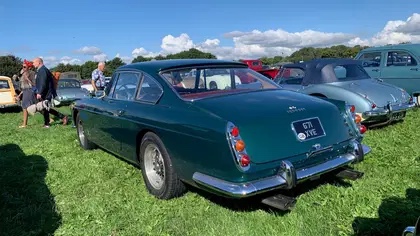
The Ferrari 250 GTE was the first Ferrari produced in series with four seats. The model responded to a clear demand from customers who wanted the performance of a Ferrari but with greater practicality.
Even Enzo Ferrari himself supported the concept. He believed that two-seat berlinettas were not always practical for everyday driving, and the 250 GTE offered a more usable alternative while keeping the brand’s sporting DNA intact.
Under the bonnet sits the legendary 3.0-liter Colombo V12, an engine that in a more powerful version also powered the iconic Ferrari 250 GTO. While the design by Pininfarina may not be the most dramatic Ferrari ever created, it still expresses timeless Italian elegance.
Why Its Value Is Rising Again
The reason behind the rising value of the 250 GTE is somewhat tragic.
For decades, many of these cars were sacrificed to create replicas of more valuable Ferraris such as the 250 GTO or the California. As a result, many original GTEs disappeared.
The surviving cars are therefore becoming increasingly rare.
At the same time, interest in four-seat classic Ferraris has grown again. Collectors appreciate the fact that these cars allow them to share the driving experience with friends or family, rather than keeping the car as a purely two-seat sports machine.
What Collectors Look For Today
Modern collectors pay extremely close attention to originality.
The original configuration, color and specifications have become critical factors for value.
Interestingly, market taste has also evolved. Unlike in the 1980s, collectors today are often less interested in bright red Ferraris—especially when it comes to 2+2 grand tourers. More elegant and period-correct colors are usually preferred.
Market Value
The market reflects this renewed interest.
Recent auctions have shown well-preserved examples selling comfortably above €400,000, while not long ago the Ferrari 250 GTE typically traded closer to €300,000.
For collectors, the message is clear: an original and well-preserved 250 GTE is no longer the overlooked Ferrari it once was.
Stories like this remind us why the classic car world is so fascinating.
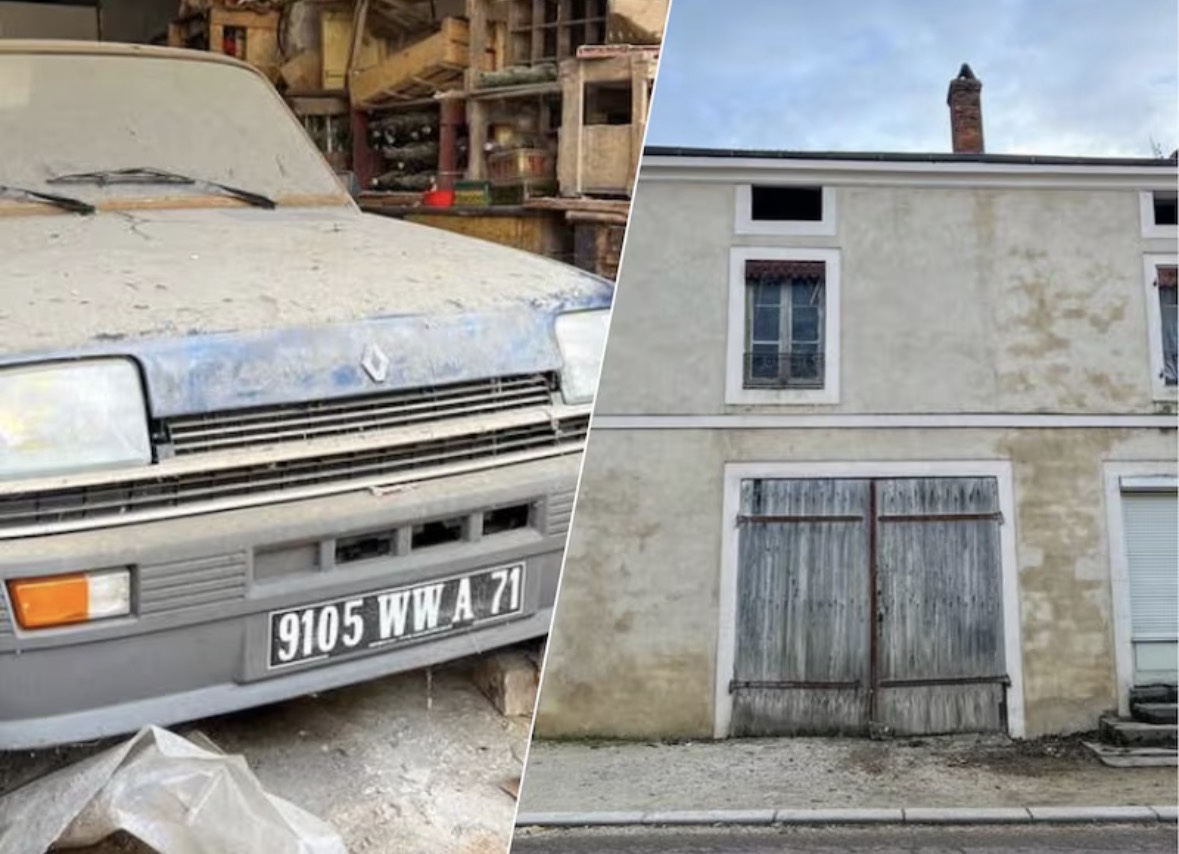
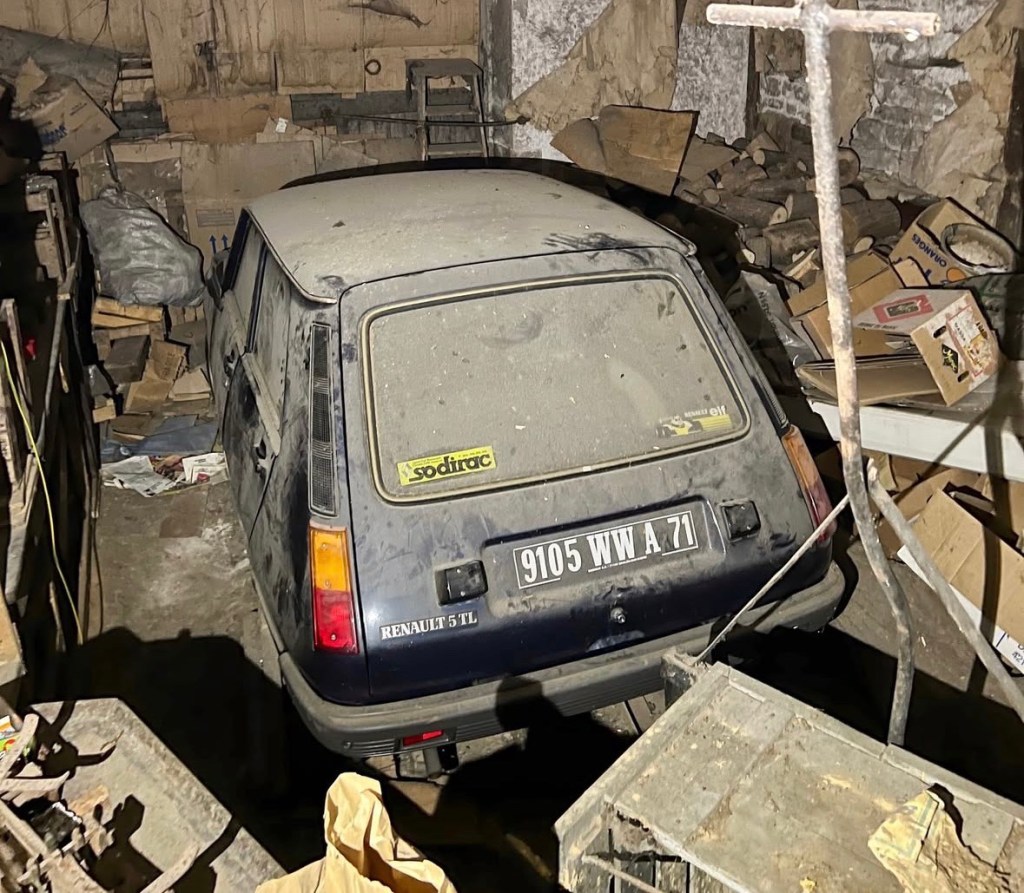
A car built in 1982 has recently been discovered in a French barn — almost untouched, preserved in time. According to reports, the original owner never truly dared to drive it.
The result? A rare automotive time capsule.
A Forgotten Treasure
The vehicle, a classic from the early 1980s era of Renault, was stored away for decades. Covered in dust but largely intact, it represents an authentic snapshot of automotive history.
Unlike restored classics, barn finds often tell a more emotional story:
The car was bought with pride
Carefully preserved
Rarely used
Eventually forgotten
Why Barn Finds Matter
Collectors value originality above all else.
A vehicle that:
✔ Retains factory paint
✔ Has extremely low mileage
✔ Remains mechanically untouched
✔ Has full documentation
can sometimes be more desirable than a fully restored example.
Originality cannot be recreated.
Emotional Ownership
What makes this story unique is the human element.
The owner reportedly never fully drove the car — possibly due to caution, emotional attachment, or fear of damage.
It’s a reminder that classic cars are not just machines — they are emotional investments.
Market Perspective
Early 1980s vehicles are increasingly entering collector territory.
Models from that era offer:
Simpler mechanical systems
Analog driving feel
Growing nostalgia value
Affordable entry points compared to 1960s/70s classics
Time-capsule examples can command strong interest.
Restoration or Preservation?
The big question with barn finds:
Should you restore it…
or preserve it exactly as found?
In many cases, careful mechanical recommissioning while maintaining originality is the smartest approach.
Final Thought
A dusty car in a forgotten barn may look insignificant at first glance.
But in the classic world, untouched history is often more valuable than polished perfection.
This 1982 time capsule reminds us:
Sometimes the most special cars are the ones that never truly left the garage.
Create Your Own Stories Benable is an app to share your favorite things, and earn from 40,000 brands. Skip the waitlist with my link:Check it Out
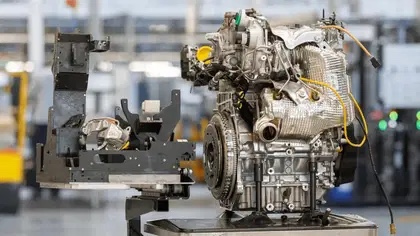
While Europe pushes toward electrification and a 2035 combustion phase-out, Renault has just demonstrated that traditional petrol technology is far from obsolete. The brand has developed an ultra-efficient gasoline engine that breaks previous fuel consumption records.
This raises an important question:
Is combustion technology truly ending — or simply evolving?
What Happened?
Renault revealed a new petrol engine achieving exceptionally low fuel consumption figures. The technology focuses on:
Advanced thermal efficiency
Improved combustion control
Reduced friction losses
Optimized injection systems
The result: significantly lower fuel consumption compared to previous-generation engines.
Why This Matters
The 2035 Debate Is Not Black & White
Europe plans to phase out new combustion car sales by 2035, yet developments like this suggest manufacturers are still investing heavily in optimizing internal combustion engines.
This signals:
Hybrid systems will likely remain important
Combustion efficiency may continue improving until the final phase-out
Policymakers may face pressure if technology keeps advancing
Consumer Impact
For buyers who:
Lack access to reliable charging infrastructure
Drive long distances
Prefer lower upfront costs
Ultra-efficient petrol engines remain a viable option in the transition period.
Market Strategy Implications
Manufacturers appear to be hedging risk:
Investing in EV platforms
Improving hybrid systems
Refining combustion engines simultaneously
This diversified strategy reduces exposure to regulatory or infrastructure uncertainty.
Long-Term Outlook
Even if the 2035 target remains in place, innovation in combustion engines:
Lowers emissions in the short term
Reduces fuel costs for consumers
Buys time for charging infrastructure expansion
Efficiency improvements could slow the immediate push toward full electrification in certain segments.
For Buyers: What Should You Do?
If you’re considering a vehicle purchase:
Compare total cost of ownership (fuel vs electricity)
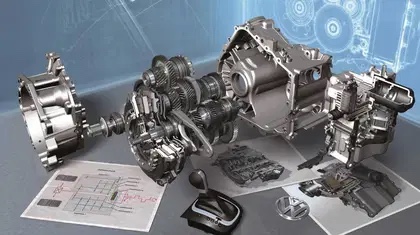
Dual-clutch transmissions (commonly known as DSG in Volkswagen Group vehicles) are praised for their fast, smooth gear changes and fuel efficiency. However, when purchasing a second-hand car equipped with a DSG gearbox, careful inspection is essential.
Here’s what you need to know.
What Is a DSG Gearbox?
DSG stands for Direct-Shift Gearbox, a dual-clutch automatic transmission system used by brands within the Volkswagen Group such as:
#Volkswagen #Audi #Škoda #SEAT
It uses two clutches:
One for odd gears
One for even gears
This allows lightning-fast gear changes without interrupting power delivery.
Why DSG Is Popular
Smooth shifting
Better fuel efficiency than traditional automatics
Sporty driving feel
Widely available in European used market
But there are important risks when buying second-hand.
What to Check Before Buying
Maintenance History Is Crucial
Many DSG gearboxes require oil and filter changes every 60,000 km (depending on type).
⚠ If maintenance was skipped, internal wear can occur.
Always ask for documented service history.
Wet vs Dry Clutch Versions
There are two main types:
Wet clutch DSG → more durable, oil-cooled
Dry clutch DSG → lighter and more fuel-efficient, but more sensitive to wear
Some early dry-clutch versions had reliability complaints.
Test Drive Red Flags
During test drive, watch for:
Jerking at low speed
Hesitation when accelerating
Delayed gear engagement
Vibrations
These may indicate clutch wear or mechatronic unit issues.
Mechatronic Unit Problems
The mechatronic unit controls gear shifts electronically. Repairs can be expensive if it fails.
Repair costs can range significantly depending on model and damage severity.
Potential Repair Costs
Clutch replacement: expensive
Mechatronic repair: costly
Full gearbox replacement: very high cost
This is why buying a DSG-equipped used car requires careful inspection.
Strategic Market Insight
DSG-equipped vehicles are very common in the European used market. Because of this:
Resale value remains strong
Buyers are familiar with the system
Well-maintained units are reliable long-term
However, poorly maintained examples can become expensive quickly.



 Benable.blog